Physical Embodiment in VR: Interchangeable Web-Based Modules using Ubi-Interact
Thesis, 2022.
I had the honor to write my thesis at TUM's Research Group Argumented Reality (FAR). During the thesis, I implemented the physical embodiment process described by Sandro Weber et al using the browser game engine Babylon.js and Weber et al's network library Ubi-Interact.
When people interact with VR, their body pose often needs to be translated to a virtual model that can interact with virtual objects. This is a three step process: the user pose needs to be tracked, the velocities need to be computed, and feedback needs to be given from a physics engine. These three steps can run relatively independently - in online multi user use cases it might make sense to run parts locally and other parts on a server.
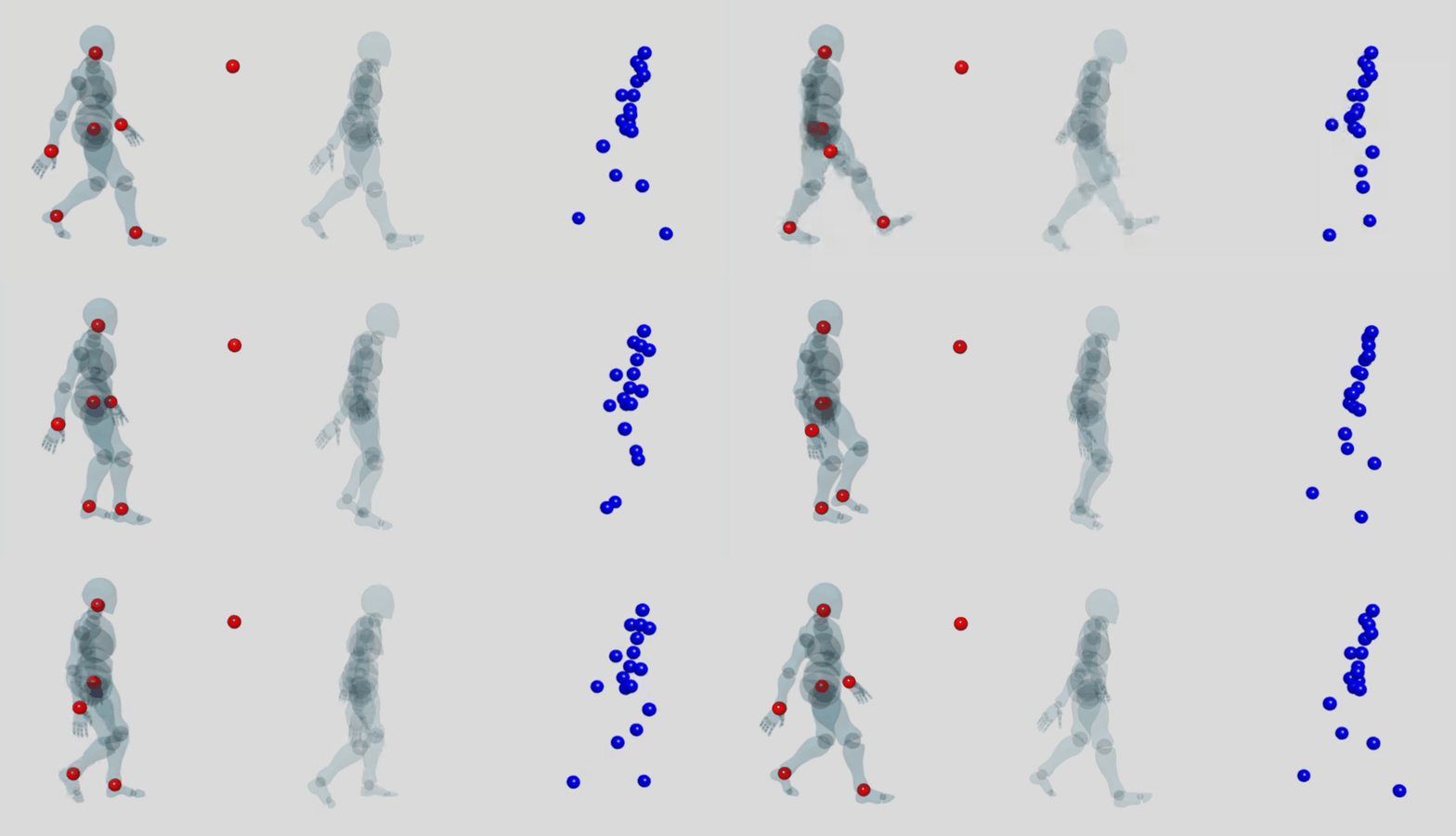
My implementation makes it possible to run all these steps in the browser. It also partially works in combination with an already existing Unity implementation. It should be considered a proof of concept more than a finished piece of software, due to the lack of a solid inverse kinematics library for browsers.
Check it out: ubii-vr-physics-embodiment-babylonjs
back